HR Business Partner
Fractional HR Business Partner for Small Businesses
Senior HR expertise and hands-on support for mission-driven small businesses, without a full-time HR hire.
HR Business Partner
Fractional HR for Small Businesses
Senior HR expertise, on-call support, project execution, and fractional HR SMEs on demand for small businesses
Is a fractional HR Business Partner right for your company?
Growing businesses typically reach a point where HR needs senior strategic leadership, but a full-time HR Director is not yet in the budget. Sometimes that means the CEO, COO, or CFO is managing HR in addition to their core job. Sometimes there is a capable HR or operations person doing the day-to-day work but not positioned to advise leadership or connect people strategy to business goals. You know the people side needs more attention at the leadership level. That is the gap a fractional HR Business Partner from BFM fills .
This might be for you if:
- You or your operations manager is handling HR between everything else
- You’re growing past the point where informal works, and you need real policies
- You’re competing for talent against companies with bigger budgets and HR departments
- You need additional capacity to prepare for a fast growing team” or something like that
- You’re juggling payroll, benefits, and PEO vendors with no one owning the relationship
- A people problem has already cost you time, money, or a good employee
What does a fractional HR Business Partner do?
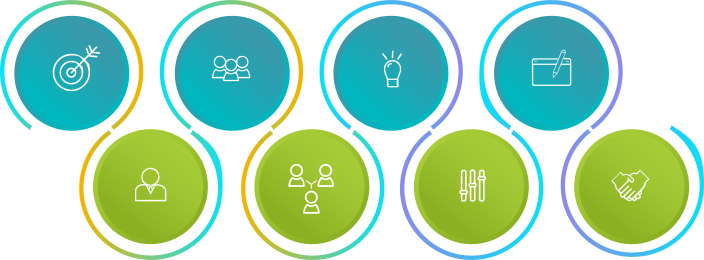
Project Execution
People Strategy
Organizational Insight
Systems + Learning
Cost-Effective Expertise
Integrated Capacity
You get access to a full team with broad experience: coaching and training, systems and strategy, and recruitment for key positions.
Tailored + Trustworthy
Strategic Collaboration
What you get with BFM as your HR Business Partner
- A people strategy: a clear plan with practical steps to put it into action.
- Support through leadership transitions: onboarding and role clarity
- HR practices that work: hiring, performance management, and retention
- Aligned teams: communication, collaboration, and shared purpose
- Leaders ready for complexity: one or more fractional HR leaders based on your needs to provide coaching and thought partnership
- The right HR tools and systems: processes that support growth
- Sustainable talent systems: succession planning and long-term resilience
How can fractional HR increase our organization’s capacity?
Take our 5-minute HR Capacity Assessment. There are no right or wrong answers. You’ll get a short summary of what your answers suggest would be the best growth opportunity and an option to talk it through with our team.

How Does a HR Business Partner Engagement Work?
Discovery call.
A conversation about your company, what’s urgent, and what you want to build.
Assessment and priorities.
We review your people practices, systems, and goals through assessments and structured conversations, then agree on priorities together.
Ongoing partnership
Regular check-ins, real-time thought partnership when issues come up, and hands-on execution of priority projects.
Regular review
We revisit priorities on a set schedule and adjust as your organization changes.
Trusted by High-Performing Leaders
Small Business in Finance
An investment firm partnered with Building for Mission to strengthen team effectiveness and alignment as it scaled. The firm recently hired several new team members and needed a stronger talent infrastructure to support the growing team. The firm sought working norms and structures that would support consistent execution and collaboration across the team.
Over more than six months, BFM worked alongside the firm to develop a shared way of working, with a focus on faster onboarding for new team members, stronger deal team execution, clearer decisions, and greater accountability. BFM facilitated team sessions to build a common language for how colleagues work and communicate, coached members of the executive team to develop as leaders, and provided HR consultation to the firm’s Operations lead through 1:1 coaching. To ensure long-term integration BFM developed a plan to embed these practices in daily operations.
The firm ended up with a more aligned team and practical standards to carry forward as it grows
Frequently Asked Questions about Fractional HR Business Partners
Common signs include a c-suite leader handling HR on top of their role, growth or restructuring, rising turnover, or policies that haven’t kept up with your size. It’s also a strong fit if you have an HR generalist who needs senior-level backup.
es, for most businesses under a few hundred employees. A full-time HR manager is a salary plus benefits and one person’s experience. Fractional support costs a fraction of that and gives you a team with broader expertise (such as employee relations, recruitment, workforce planning, compensation, HR Systems, etc), which matters when the question in front of you is outside any one person’s background.
Yes. Plenty of our clients use a PEO for payroll and benefits. We handle the strategic side a PEO doesn’t cover, and we manage that relationship so you’re not the one chasing it.
Yes. Many of our clients already have an HR generalist or operations lead. We act as their strategic partner and backup, adding senior expertise and capacity rather than replacing anyone
That’s a lot of what we do. We help you build the structure before you need it: role clarity, hiring processes, compensation bands, and the policies that new requirements trigger as your headcount grows.
BFM’s HR Business Partner engagements start at $1,950 per month, with a three-month minimum. Pricing depends on your organization’s size and the scope of support you need, and we’ll recommend the right level after a discovery call.
We don’t run payroll directly. Instead, we oversee your HR vendor relationships, help you choose the right payroll, benefits, or PEO partners, and connect you with providers we trust, so your systems work together and you’re not managing them alone.
Curious about how a HR Business Partner would work for your Small Business?
Let’s talk about how to develop a people strategy that drives revenue.